DarjeelingHIMALAYAS
Jaldapara, Buxa and Jayanti on a budget

The Dooars & Siliguri · Shoestring trip

Jaldapara, Buxa and Jayanti on a budget

The eastern Dooars by train and shared car: two nights in Madarihat for Jaldapara's rhinos and Totopara, two nights up at Buxa Fort with a dawn at Lepchakha, and a last night on the Jayanti riverbed. Big wildlife, real history and good walking at shoestring cost.

Fare₹11,000 Nights5 Per day₹1,850 Highest867m PaceActive

Photo: JKDs · CC BY 2.0, Wikimedia Commons

Alipurduar district holds three of the region's best experiences within an hour or two of each other: Jaldapara's rhino grassland, the forest walk to Buxa Fort, and the white riverbed of Jayanti under the Bhutan hills. This plan connects them by the Dooars line and shared cars, with homestays and budget lodges throughout.

It suits travellers who are happy to walk: the 5 km climb to Buxa is the heart of the trip, and you sleep two nights on the ridge to have time for Lepchakha. Jaldapara gives you one dawn jeep safari on a shared seat; add another if the budget allows.

Why this trip

  • Dawn jeep safari for Jaldapara's rhinos
  • A respectful visit to Totopara
  • The forest path to Buxa Fort
  • Sunrise from Lepchakha over the plains
  • Evening on the Jayanti riverbed

Day by day

NJP railway station or Bagdogra airport to NJP railway station or Bagdogra airport · Mixed

Day01

Train from NJP to Madarihat

Madarihat≈ 125 km · 4–5 h by train or busDinner

Take a morning Dooars line train from NJP or Siliguri Junction to Madarihat; check the current timetable. The line runs past tea gardens, the Teesta and the forest belt around Chapramari. Check into a budget lodge or homestay in Madarihat, walk to the forest counter to confirm your shared jeep seat for tomorrow, and buy snacks for the early start. Early dinner and bed.

Spend today: ₹150 train + ₹150 lunch

Day02

Jaldapara at dawn, Totopara by afternoon

Madarihat≈ 45 km return to TotoparaBreakfast, dinner

Board a shared jeep for the first safari slot around 6 am in winter, into the tall grass where rhinos graze in the open early. Back for breakfast. After lunch, share a car with other travellers to Totopara, about 22 km away, home of the Toto community and its endangered language. Walk the lanes quietly, have tea at a village shop and ask before photographing anyone. Back to Madarihat by dusk.

Spend today: ₹500 safari seat + ₹400 car share + ₹150 lunch

Day03

To Santalabari and up to Buxa

Buxa≈ 60 km by train or bus and shared car, then 5 km on footBreakfast, dinner

Take a morning train or bus east to Hasimara or Rajabhatkhawa, then a shared car to Santalabari, the road head. Pay forest fees and start the 5 km stone path through forest to Buxa, about two to three hours up. Check into a homestay in Buxa village by afternoon, walk to the fort ruins and the memorial to the revolutionaries detained here in the 1930s, and watch the light go over the plains.

Spend today: ₹100 train or bus + ₹250 car share + ₹150 fees + ₹150 lunch

Day04

Lepchakha sunrise, a slow Buxa day

BuxaBreakfast, dinner

Walk up to Lepchakha before dawn with a local guide and a torch, about an hour and a half, for sunrise over the Dooars plains and rivers. Tea in the village and back down to Buxa for breakfast. The rest of the day is free: rest, read, walk a short way along village paths, and talk with your homestay family, many of whom are Dukpa, about Buxa's past, including the Tibetan monks who lived here from 1959 to about 1971.

Spend today: ₹300 guide share + ₹150 lunch

Day05

Down to Jayanti and its riverbed

Jayanti5 km on foot, then ≈ 30 km by shared carBreakfast, dinner

Walk down to Santalabari after breakfast and share a car to Jayanti via Rajabhatkhawa. Check into a river-facing homestay. In the late afternoon walk out onto the vast stony bed of the Jayanti river, cross a couple of shallow channels and watch the Bhutan hills turn blue and purple. Leave before dusk, when elephants may cross. Dinner with your hosts, who can tell you about the Mahakal cave and Pokhri lake.

Spend today: ₹350 car share + ₹150 lunch

Day06

Alipurduar and the train home

≈ 30 km by car, then ≈ 170 km by trainBreakfast

A last dawn walk along the riverbank for birds, then breakfast and a shared car or local bus to Alipurduar Junction, about an hour. Take a train back to NJP; services and timings vary, so check before you travel and book a reserved seat if possible. Arrive in NJP by evening.

Spend today: ₹200 car share + ₹300 train + ₹150 lunch

Included

  • Trains, buses and shared car seats NJP–Madarihat–Santalabari–Jayanti–Alipurduar–NJP
  • Five nights in homestays and budget lodges with dinner and breakfast
  • One shared Jaldapara jeep safari seat with fees
  • Buxa forest fees and a guide share for Lepchakha

Not included

  • Totopara car share if no group forms
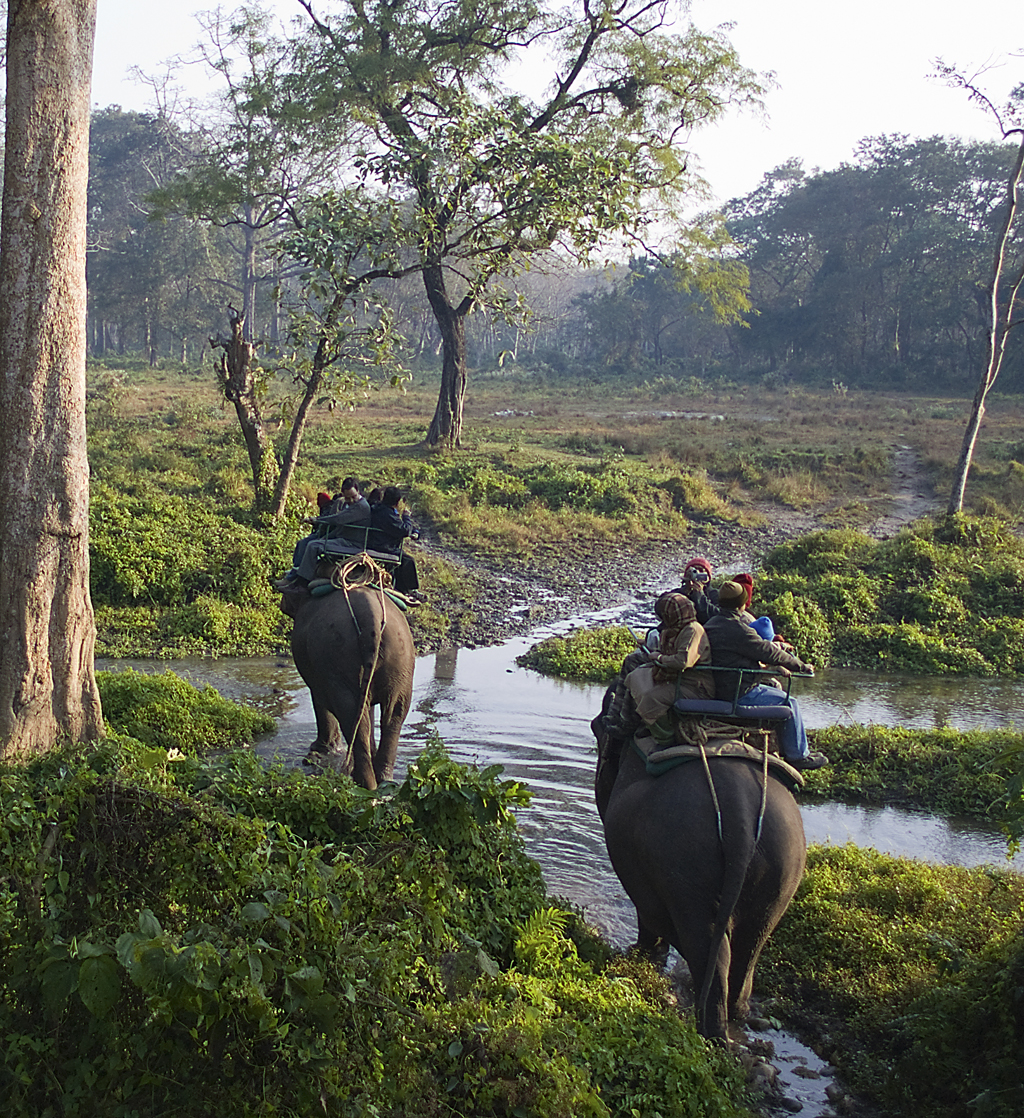
  • Extra safaris and elephant safari
  • Porter for the Buxa path
  • Travel to NJP, tips and personal expenses

Three ways to spend less

  • Book trains early and travel in a group of three or four to split shared cars and guides.
  • Skip a second Jaldapara safari and use the free afternoon for Totopara or tea gardens instead.
  • Leave heavy luggage at a Madarihat lodge and come back for it, or carry only a daypack for the whole loop.

Good to know

  • Parks and Buxa's tourism zones close in the monsoon; check current status before you travel.
  • Hollong lodge inside Jaldapara burned in June 2024; stay at Madarihat.
  • Carry ID for safaris and forest gates.
  • Leeches appear on forest paths from May to October.

The route

Where the trip goes

Map of Jaldapara National Park, Buxa, JayantiIndiaBhutanBangladeshJaldapara National Park1Jaldapara National ParkBuxa2BuxaJayanti3Jayanti10 kmN
  1. 1Jaldapara National Park 2 nights
  2. 2Buxa 2 nights
  3. 3Jayanti 1 night
Drawn by Darjeeling Himalayas from Natural Earth outlines (public domain). Borders as depicted by India. Not for navigation.

Questions people ask

Questions about this trip

Is five nights enough for the eastern Dooars?

Yes, for Jaldapara, Buxa and Jayanti at a steady pace. Add a night at Jayanti if you want the full Mahakal cave walk, or a night at Chilapata for the Nalraja Garh ruins. Five nights is the minimum to avoid rushing the Buxa walk.

Can we do this trip without a car?

Yes. Dooars line trains reach Madarihat, Hasimara, Rajabhatkhawa and Alipurduar, and shared cars and local buses cover the gaps to Santalabari and Jayanti. Travel in the mornings, when services are most frequent, and ask homestay hosts for jeep timings.

How hard is the walk to Buxa?

About 5 km on a stone path with a steady climb to around 850 m, two to three hours up. It is easy to moderate and needs no trekking experience. Lepchakha above is steeper but short. Good shoes and water are enough.

Is Totopara open to visitors?

Yes, it is a village anyone can visit, with no special permit for Indians. Go as a respectful guest: walk the lanes, buy tea and snacks locally, ask before photographing anyone, and do not treat residents as an attraction.

Can we see tigers in Buxa?

Almost certainly not. A tiger was camera-trapped in December 2021 after no records since 1998, and sightings remain extremely rare. Buxa is about the forest, the fort and the views; elephants, gaur and birds are the wildlife you will meet.

Where do we stay at Madarihat on a budget?

Small lodges and homestays along the highway and in nearby villages charge about ₹1,200–2,000 per person with meals. The WBTDC Jaldapara Tourist Lodge costs more. Book ahead for winter weekends, when Bengal families fill the town.

What if the train timings do not fit?

Use buses on the highway between Madarihat, Hasimara and Alipurduar, which run frequently by day, and shared or hired cars for short hops. A car from Madarihat to Santalabari costs about ₹2,000–2,800 and can be shared.

Is the Jayanti riverbed safe?

In the dry season, near the village and in daylight, yes. Cross only shallow channels and leave before dusk, when elephants may cross. After heavy rain upstream the water can rise suddenly; move to the bank at once if it changes.

When is the best time for this trip?

November to February is ideal: dry paths, clear Lepchakha sunrises and good rhino sightings. October and March are fine. April is hot on the plains. Avoid June to September, when parks close and paths are slippery.

Plan with a local

Tell us your dates. We send the real cost

Where you want to go, how many of you, and roughly what you want to spend a day. A planner who lives in these hills replies within one working day with a route and every rupee written down.

  • No payment to start
  • Shared jeep or private car, your choice
  • Homestays we have slept in
  • Change anything, any time before you book

Get a priced route

Within one working day. No payment to start.

We reply by email or WhatsApp. See our privacy policy.

Ask about this trip