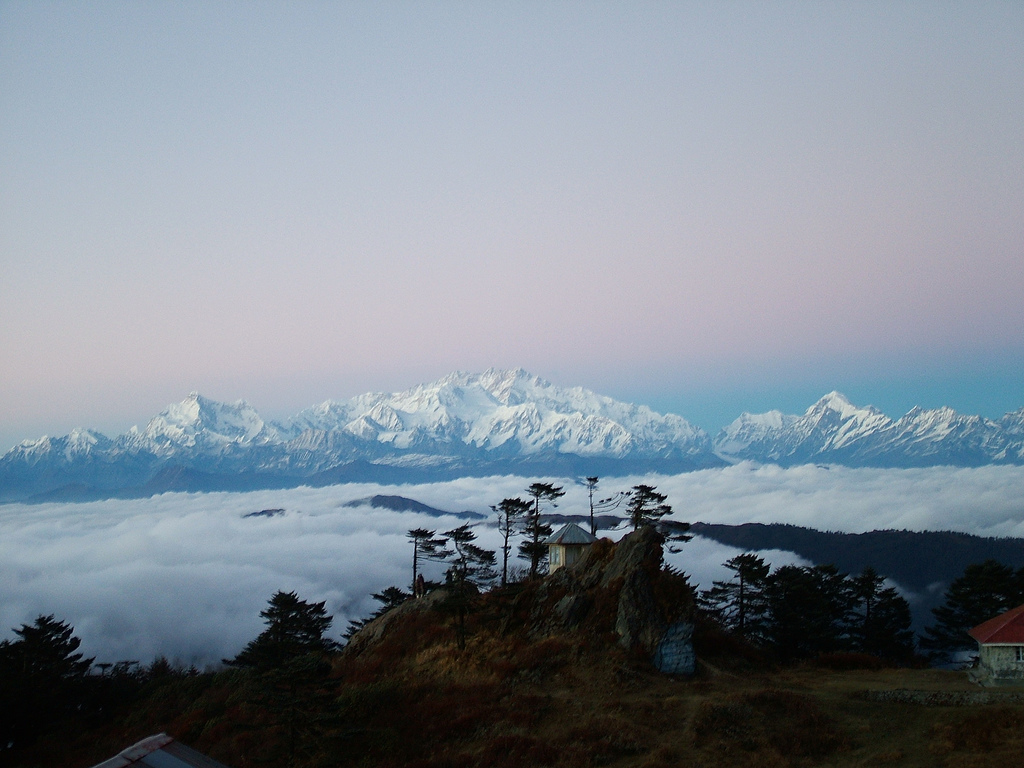
The story of Singalila
A border ridge, a poison hill and forty old jeeps
The ridge you walk was bought. In 1882 the British government purchased the Singalila tract from the Sikkim Durbar and notified it as reserve forest, which is why the slopes above Maneybhanjan are still oak, rhododendron and silver fir instead of tea. Thirty-four years earlier the botanist Joseph Dalton Hooker had come up Tonglu from Darjeeling, collecting the rhododendrons that later filled British gardens. In 1905 the first documented attempt on Kanchenjunga, led by Jules Jacot-Guillarmod with Aleister Crowley in the party, marched north along this same ridge.
The highest top carries a warning in its name. Sandakphu is usually traced to Lepcha words for 'height of the poisonous plant', after the aconite (Aconitum ferox) and certain rhododendrons that once grew thick near the summit. Herders are said to have muzzled sheep and cattle driven across it so they could not graze. A little south, the col of Bikheybhanjang carries the same idea in Nepali: bikh means poison.
Today the ridge is a working frontier and a protected forest at once. Singalila became a wildlife sanctuary in 1986 and a national park in 1992, and red pandas still live in its bamboo and fir. The border with Nepal follows the crest, so the trail steps in and out of Ilam district at Tumling, Jaubari and Kalipokhri. And up the cobbled track grind the Land Rovers of Maneybhanjan, a fleet of 1950s and 1960s Series vehicles that still do the school, ration and trekker runs.


