The local story
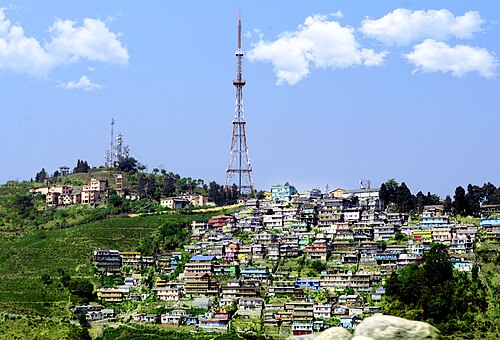
Kharsang, the orchid town that held Netaji
Ask anyone in Kurseong what the name means and you will hear the same answer: it comes from the Lepcha word Kharsang, usually translated as 'land of the white orchid'. The orchid people point to is Coelogyne cristata, a white flower that hangs from mossy trees on these slopes in late winter. Another explanation ties the name to a local cane. The land itself passed from Sikkim to Nepal around 1780, back to Sikkim under the Treaty of Titalia in 1817, and into British hands with the Darjeeling tract. Kurseong became a municipality in 1879.
In 1922 the lawyer Sarat Chandra Bose bought a house on Giddapahar, the hill above the town, as a family retreat. His younger brother Subhas came here several times, and in 1936, after returning from Europe, he was held at the house under British house arrest. From this house he wrote political letters and letters to Emilie Schenkl in Austria. The Bose family kept it until the 1990s; it is now the Netaji Subhas Chandra Bose Museum.
Kurseong's other life was religious and scholarly. From 1889 to 1971 St Mary's Hill held the Jesuit theological college that later moved to Delhi and became Vidyajyoti College of Theology. The town still has a dense ring of schools, from Dow Hill to St Alphonsus, and children in uniform are part of its morning traffic.